Showing posts with label Native Plants. Show all posts

Monday, June 28, 2010

Saturday, May 15, 2010

Bloom Day: May 2010

All from my garden. I thought April was the best month for my garden, but May is not too bad either. Although there is not a huge variety in color, I like that there is less pink than last month. The previous owners of our house loved pink. Everything they had planted had pink flowers and bloomed in the Spring. My challenge has been to expand the bloom cycle and palette.
It is encouraging to put these snapshots together, because it reminds me that I have made some progress. Only the rhododendron was here when we bought the house. Everything else, we planted.
persicaria in bloom at 2 Green Acres, a Maryland gardenpersicaria polymorpha


pyracantha flowers at 2 Green Acres, a Maryland Garden

pyracantha angustifolia

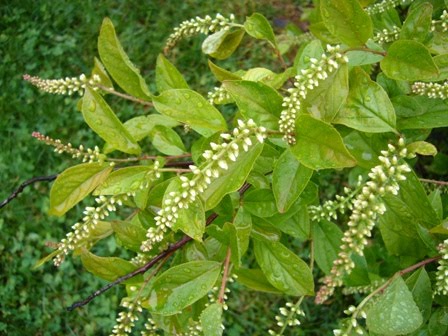
itea virginica at 2 Green Acres itea virginica


spring geranium from 2 Green Acres geranium


rhododendron in bloom at 2 Green Acres, a garden in Maryland

rhododendron

Friday, April 30, 2010

A hedgerow is born!

the beginnings of a native plant hedgerow at 2 Green Acres, a Maryland garden
Last weekend, I got started on the hedgerow I am planting this year. My plans have changed a little from my last post - still plan on blueberries and winterberries. Now, I have also added sumersweet (clethra alnifolia) to the plan.

Last weekend was the first weekend of the Herring Run Native Plant sale. Good thing I got there early - they were mobbed! Fortunately, I was able to find most everything on my shopping list.

I bought 5 blueberry bushes, and 2 viburnum for my berm (more on that later). I also bought 3 summersweet. I wanted 3 full sized plants, but there was only one left. So I snagged that one and two "sixteen candles" variety. I did not buy the winterberry. Honestly, I did not even look for it because the inventory list printed before the sale showed that they only had a few and I just assumed they would be gone before I got there. I am pretty sure I can find them somewhere else.

I spent Saturday and Sunday planting all my new plants. I now have a (very sparse) hedgerow, with a big gap in it for the winterberry. Progress!

Tuesday, April 20, 2010

Wildflowers on the C&O canal

Wildflowers from 2 Green Acres, a garden blog Mystery flower on the C&O canal

This past weekend, I went for a long walk on the C&O canal, near Sharpsburg, Maryland. I was amazed at the wildflowers I saw - at least one of which I could not identify.

I saw Mayapples, Solomon's Seal, False Solomon's Seal, Virginia Blue Bells, Squirrel Corn, and a wide variety of violets - purple, blue, white, and yellow.
I have never seen so many wildflowers at one location. I think part of it was luck - it was a good time of year to see wildflowers. Part of it was knowledge - a year ago, I am not sure I would have known what some of these were. And would not have known to look for Solomon's Seal. And I think part of it is the area - the park has a huge variety of native plants, and I was able to see a good variety of them.

Below are some pictures from my walk. Can anyone tell me what the white flowers are in the picture at the top of the post? I saw them everywhere on this trip - in fields, in people's yards, etc. I live about 90 minutes away from here, and have never seen these flowers. Any ideas?

wilflowers from 2 Green Acres a mid-atlantic garden blog

Squirrel corn

2Green Acres Wildflower

Virginia Bluebells

More wildflowers from 2 Green Acres, a Maryland Garden BlogFalse Solomon's Seal

Wildflowers from 2 Green Acres a mid-Atlantic garden blog
Violets


More violets


Thursday, April 15, 2010

Bloom Day: April 2010

Azalea at 2 Green Acres
Cherry Tree at 2 Green Acres

Redbud at 2 Green Acres
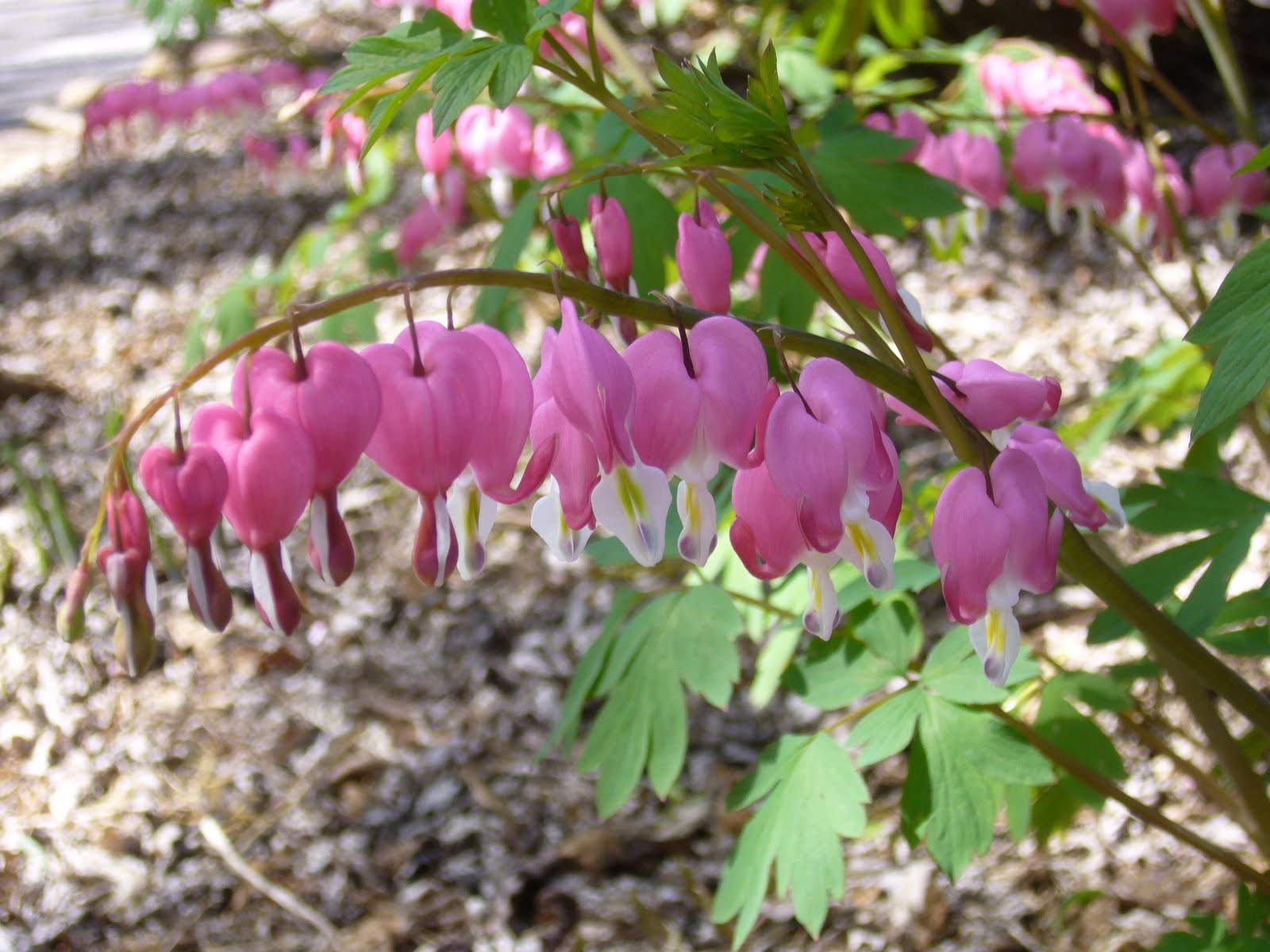
Bleeding Heart at 2 Green Acres

Grape hyachinth at 2 Green Acres
Daffodil at 2 Green Acres
Some natives, some not, but probably the best month for my garden.

Saturday, April 3, 2010

Garden Project: Hedgerow

As mentioned in an earlier post, I want to plant a hedgerow this year.

I am only half joking when I say I am not exactly sure what a hedgerow is, but I like the sound of the word. I do know that hedgerows contain shrubs or small tree that product fruit or berries and so are great for wildlife.

My hedgerow will be an important source of fruit for wildlife and humans. It is where I will plant my blueberries. In addition, I also intend to plant winter berry, and possibly some viburnum. I have a 50 foot long space, which sounds like a lot, but, when planting bushes that can grow 8 - 10 feet wide, I suddenly realized that this is not that much space.

I had hoped to plant my blueberries last fall, but failed to get my act together in time. Specifically, I did not get a soil test. I continued to procrastinate, but finally got around to sending it off a couple of weeks ago. I got the results back last week.

The thing I was most concerned about was the soil pH. Blueberries need acidic soil (between 4-6.5 pH). I did not think my soil would be acidic enough, but the soil test came back spot on - the pH was 5.3. This is also good for the winter berries. I think the reason the soil is so acidic is that this area is right next to some pines, so there is a lot of pine needles on the ground. Whatever the reason, I am happy.

The area I had tested is a low spot on the property. To describe it as a swale would be an exaggeration, but it is sort of a baby swale. Unfortunately, after getting my test results back, I read that blueberries don't like to have wet feet. What? I thought they liked boggy areas. In fact, I specifically picked this spot for them because it is the dampest area on my property (which is not saying much). Then I read in other books and on other sites they like wet soils.

Argh! This is why I get so paralyzed! Which source to believe?

I have agonized about this for the last several days and finally decided that I am going ahead with my plans. Hopefully it will work out.

Sunday, February 21, 2010

Garden Project: The Berm

As I mentioned in a previous post, several years ago, I had a berm created in my yard. I thought it would solve at least two problems. First, I had a lot of rock in my yard where an above ground pool once stood. Originally, I thought I could slowly get rid of the rock; but after carrying dozens of buckets of rock and not making a noticeable difference, I decided I had to come up with a plan B.

The other problem in my yard was the view of the neighbor's trampoline. They kindly placed this right at the edge of their yard so that it is visible from my deck and almost every window on the back of my house. Fortunately, their kids never used it that much, but it is a huge eyesore.

So, I thought - why don't I pay someone to move the rock to the edge of the yard, put some more dirt on top of it, and create a berm that I could then plant and block the ugly view from the neighbor's yard. Great idea, but it has not worked out the way I planned.

First, I was expecting the rock on the bottom, the dirt on the top. Nope - the rock is mixed in with the dirt, making it a huge pain to plant things. Second, the dirt was full of weeds, and several years later, I am still dealing with this. Third, it doesn't really block the view of the trampoline - in some ways it accentuates it. We have created this focal point, that, at certain times of year, looks rather pretty, despite all of its problems. And unfortunately, the bushes on the berm are not tall enough (and not going to get tall enough) to block the trampoline. So instead of hiding it, I am now drawing attention to it!

(As a side note, the nieghbor's youngest child has just started college. Isn't it time to put the trampoline away? Please?)

The berm is 44 ft long. Most of it (and all of the problem area) is in full sun. About half the berm is planted with native grasses, bushes, trees, etc. It may not look perfect, but it works pretty well. The other half is planted with some pyracantha and black-eyed Susans. I picked the pyracantha because I wanted something evergreen and deer resistant. It is both, but it is too short and too sparse to hide anything. The black-eyed Susans look nice from a distance, but are being crowded by tons of weeds. Every year it gets a bit worse and is almost to the point where I should kill everything and start over.

Although the black-eyed Susans look great in the late summer, I think one of the problems with growing them by themselves is that they come up a bit late and the weeds get a headstart on them. To try to address this, I am going to plant several other perennials that bloom (and so hopefully come up) earlier, and presumably will help crowd out the weeds. The plants I have picked are all native, meadow type plants.

They are:
These are all widely available, so it should be no problem getting them. Before planting them, I will once again (and more than once if there is time) try to remove all of the existing weeds.

As for the pyracantha, my current plan is to leave it alone and plant additional bushes behind it (on the backside of the berm). The bushes have to be deer resistant, and I would prefer that they are native and evergreen. This narrows my options - a lot. The one criteria I am most willing to give on is evergreen.

I have narrowed my list to four possibilities:
  • Silky Dogwood (cornus amomum) - grows 6-12 feet high, white flowers in spring, berries in August, good fall color (not evergreen)

  • Inkberry (ilex glabra) - 6-10 feet high, evergreen, black berries, need both male and female plants

  • Southern bayberry (morella cerifera) - 6-15 feet high, semi-evergreen, but probably not evergreen in my area

  • Scrub oak (quercus ilicifolia) - 12-20 feet high, leaves persist into winter (holds dead leaves), good fall color

The last option is not a bush, but a small tree. All have good wildlife value. The bayberry is probably the least visually interesting, but probably the easiest to find. I like the idea of planting more oaks in my yard for their incredible wildlife value, but I am concerned that these trees will get too large for the area. If I had to guess now, I think I am going to end up with either the inkberry or the dogwood. Or maybe both? I need to figure out just how many of them I need.

Saturday, February 6, 2010

Garden Projects for 2010

I have several major gardening projects that I want to focus on this year.

In the past, my eyes have always been bigger than my spade (is that how the saying goes?) and so don’t hold me to actually completing all (or maybe even any) of these. With that caveat, here are my top projects for 2010:

Project 1 – Plant a hedgerow. I want to plant a row of fruiting bushes that will attract birds and provide me some blueberries. The area is about 50 feet long and, theoretically, as wide as I want it to be. The wider I make, the less lawn there is to mow!

Project 2 – Replant my front walkway. The previous owners planted variegated euonymus (I know, I know) along the walk. But, for the first few years, it looked decent, so I focused my attentions elsewhere. Then, a couple of years ago, the plants started dying. It turns out, they have crown gall. Basically the only cure is to remove the plants and plant something resistant to crown gall. Have not yet decided what that would be.

Project 3 – Fix my berm. Several years ago, I had a berm made out of some excess soil and rock that I had (long story). My hope for the berm was that it would create a beautiful view for me to look at when I am standing at the sink. At certain times of the year, it serves that purpose, but often, it is just a weedy mess. Want to try to get this under control. Have not yet decided exactly how that is going to be accomplished.

Project 4 – Plant an oak. Although I have a number of mature trees in my yard, none are oak. Now that I understand how valuable oaks are to wildlife, I want to have at least one. But oaks grow big, so you need to make sure that you plant it in the right spot. Theoretically, this should be the easiest of the four projects, but my analysis paralysis may hit me on this one, since once placed, I will not be able to easily move the tree.

Of course, I will continue my vegetable garden this year, but since I have no plans to expand it, it is not on the list of projects.

I hope to use this blog to think through the specifics of each of these projects. I would love any and all feedback, words of advice, etc.

Wednesday, January 20, 2010

Native Plant of the Month: White Oak

White oak from 2 green acres a mid-atlantic garden blogOkay, this month's plant is a big one, and I really debated if I should include it. I know many people have small yards and are never going to be able to plant such a big tree. However, I wanted to highlight what I have learned about oaks, and this is the most impressive oak that grows in my region (the mid-Atlantic).

According to Douglas Tallamy (author of Bringing Nature Home), oak trees are the single most important plant to grow if you want to support animal diversity. Oaks support over 500 species of moths and butterflies (which, in his studies serve as a proxy for all insects). In addition, its nuts provide food for a number of small mammals.

So why the White Oak (quercus alba)? Well first, it is a beautiful, majestic tree that has beautiful color in fall. It is the Maryland State Tree and many Maryland gardeners are familiar with Maryland's most beloved tree, the Wye Oak, over 450 years old when it was felled by a storm in 2002.
As for growing conditions - first, the White Oak needs room. It will grow to 75-100 feet tall, with a spread the same size. It does well in sun or part shade and does not need a lot of moisture.

These are fairly slow growing trees and they have a long-tap root, so it is best to transplant them when they are small. A lot of traditional nurseries do not sell oaks, but they are available at native plant nurseries. Here is a source of a seedling from the Wye Oak.

Even if a white oak is too big for your yard, consider some of the smaller oaks like bear oak (quercus ilicifolia) or blackjack oak (quercus marilandica).
You might also like:
December plant of the month: winterberry
November plant of the month: doll's eyes
October plant of the month: sugar maple
September plant of the month: blueberry
August plant of the month: joe pye weed

Photo credit: Anosmia

Sunday, December 20, 2009

Native Plant of the Month: Winterberry

winterberry picture on 2 green acres, a Maryland garden blog

When most plants have hunkered down to wait out winter, winterberry (ilex verticillata) continues to put on a show. Unlike most hollies, winterberry is decidious. When it loses its leaves in later winter, all that remains are its beautiful red berries.

In addition to being a cheerful bright spot in the winter landscape, these berries serve as a great source of food for song birds in the winter months.

Winterberry at 2 Green Acres, Maryland garden blog

If you are interested in adding a winterberry to your garden, be sure to buy at least two - a male and a female. You only need one male plant for many females, but it should be within 50 feet of the females to ensure good berry production.

winterberry at 2 Green Acres, Maryland garden blog

This holly is native to the eastern half of the U.S., prefers moist, acidic soil, and grows in sun to partial shade. Winterberry bushes can get up to 10 feet tall and wide, but there are a number of varietals in all sizes. For more information on this great plant for winter interest, check out this website.

You might also like:

November native plant of the month: Doll's Eyes
October native plant of the month: Sugar Maple
September native plant of the month: Blueberry
August native plant of the month: Joe Pye Weed


Photo credit: Muffet

Tuesday, December 1, 2009

Gifts for gardeners: Books (part 1)

With the holidays just around the corner, I thought I would share some of my favorite gardening books (and a few I hope to see under the tree this year).


This list is focused on native gardening. I will post another list focused on vegetable gardening and local food.


1. Noah's Garden and Planting Noah's Garden, by Sara Stein. Noah's Garden is the first book I read that really got me thinking about native plants, their role in the local environment, and their potential role in my yard. Planting Noah's Garden takes the concepts in the first book and gives you practical advice on how to plant a meadow, build a bird house, etc. I refer back to both of these books constantly, to get both inspiration and ideas.


2. Bringing Nature Home by Douglas Tallamy. I got this book last year for Christmas and it really opened my eyes to the incredible importance of native plants for our local wildlife. Where Sara Stein is an enthusiastic and knowledgeable lay person, Douglas Tallamy is an entomologist and has a vast understanding about how insects rely on native plants for food, and birds and small mammals rely on insects as a food source, so if we don't feed the insects, the whole food chain collapses. This book includes lists of which plant feed the widest variety of insects and so are most useful in the landscape.


All three of the above books are incredibly readable, but they are not filled with glossy photos like many garden books. If that is what you are looking for, I recommend:


3. Natives Trees, Shrubs and Vines, by William Cullina. This book contains beautiful photos and wonderful descriptions of plants native to the U.S. The author writes in a very conversational style and his passion for native plants shines through. The book also includes helpful information on plant needs (light, moisture, etc), propogation, and interesting varietals. This is not an inexpensive book, but it is a great reference.


4. Native Ferns, Moss, and Grasses and Wildflowers, by William Cullina. I don't own these books; they are both on my Christmas list this year. But based on reviews, and the fact that I love the other book by William Cullina, I can't wait to get my hands on them, and I feel comfortable recommending them without having read them.


5. Native Alternatives to Invasive Plants by Brooklyn Botanic Garden. It is sad but true -we are often more familiar with invasive plants such as Bradford Pear or Butterfly Bush, than we are with native plant options. This book is an excellent resource to help us make better plant choices and still get the look we want in the garden. The pictures are not huge, but the book provides a lot of information that can be supplemented by the web or other sources.


What have I missed? Are there other books on native plants that you think are "must read"? If so, I would love to hear about them and add them to my Christmas list!

Friday, November 20, 2009

Native Plant of the Month: Doll’s Eyes

doll's eyes - a native plant on 2 green acres - a maryland garden blog
For my native plant this month, I am picking an odd one. I first saw this plant on a hike in the Adirondacks this past September. I had no idea what it was, but was mesmerized by its white berries on magenta stems.

I came home, did some research and found out that this plant, commonly known as “doll’s eyes” is a member of the buttercup family. The latin name is Actaea pachypoda. In late spring or early summer, it has interesting white flowers – like something that the Star Trek crew would find on a distant planet. But it is the berries that make you do a double take. At their height in early fall, they truly do look like little doll’s eyes, strung together by a mad scientist. Their bright white color really jumps out in a shaded woodland setting.

This is a great specimen for people who love to collect odd plants. It is also a great plant for a woodland garden – nice spring flowers, interesting foliage, and those great berries in the fall. The plants grow about two feet tall and wide. They will self-seed, but are not aggressive. Oh, and deer don’t like these plants!

One note of caution: Don’t be too tempted by the berries. To me, they don’t look appetizing at all – and they aren’t. The whole plant (particularly the berries) are poisonous to humans (and deer) if ingested. It is fine to handle the plant, but don’t try to eat any of it.

You might also like:

October native plant of the month: Sugar Maple
September native plant of the month: Blueberry
August native plant of the month: Joe Pye Weed

Tuesday, October 27, 2009

Native of the month: Sugar Maple

Sugar maple, a native plant for the Maryland garden
This month, I wanted to pick a native that has amazing fall color. Although there are a number of native trees that provide great color, including birch and hickory, in my mind, nothing compares to the sugar maple (acer saccharum). These trees have incredible leaves that vary from orange, to red, to scarlet.

In addition to their beautiful fall color, they make a wonderful shade tree and have high wildlife value. A number of songbird varieties nest in sugar maples. The only bad thing about these trees is that they can get BIG - up to 75 feet tall. So you need a lot of room for one of these guys. Also, they are not very tolerant of urban conditions - they need lots of room for their roots, and don't tolerate salt.

Sugar maples are native to the northeastern and north-central part of the U.S. and extend up in to Canada. The sugar maple is so important in Canada, they put it on the flag!

If you have room in your yard, you should consider this tree. It is beautiful year round, but especially in the fall.

By the way - fall is a great time to plant trees. If you decide to plant, consider planting a native, like the sugar maple or other native trees in your area.

You might also like:

September Native of the Month: Blueberry
August Native of the Month: Joe Pye Weed

Photo credit:
Di_the_huntress

Thursday, October 15, 2009

Climate Change and the Home Garden

Today is Blog Action Day. Once a year, bloggers around the world write about a single topic. This year, the issue is climate change.

I can hear it now - "don't lecture us about climate change - we just want to talk about gardening." But here's the thing - our gardens are impacted by climate change, and we can impact climate change with our gardens.

For example, climate change can impact what plants will thrive in your area. The USDA plant hardiness zones are slowly creeping north. Check out this great map from the Arbor Day Foundation that illustrates this point. New weather patterns are forcing some trees, such as sugar maples north out of the U.S. This has severe impacts to the maple sugar industry, but it also impacts our beloved trees in our backyards.

Climate change also has an impact on birds - causing many species to move north and some to disappear. The Audubon website cleary demonstrates the impact of climate change on our native bird populations.

Finally, there is concern among scientists that global warming will make many plants, especially food crops, more suseptible to pests and disease.

So what can we, as home gardeners do?

Several things:

1. Plant a tree (or two, or three, or....): Trees absorb carbon dioxide, the most prevelant greenhouse gas. So the more trees you have in your yard, the better for the environment. No room for more trees? Donate trees to organizaitons like the Arbor Day Foundation to be planted on public sites.

2. Grow your own food: Food that travels fewer miles from farm to plate is better for the environment. No room for a garden? Visit your local farmer's market on a regular basis.

3. Ban all chemical fertilizers in your garden: Many fertilizers are made from petroleum products, which directly contribute to global warming. Start a compost pile and break the fertilizer habit.

3. Go meatless one day a week: The production of meat creates more carbon dioxide emissions than all the cars in the world. And, as living standards around the world rise, meat consumption is increasing dramatically. Use the bounty from your garden to eat meatless at least one day a week.

Climate change is a big problem, and there is no single solution. But if we all do our part, with efforts large and small, we can prevent the worst impacts from becoming a reality.

Wednesday, September 30, 2009

Native Plant of the Month: Blueberry

Native plant from 2 Green Acres - Blueberry
Sneaking this one in on the last day of September....

Now is the time to think about planting bushes. Blueberries are a great bush that should be considered in every yard. They are beautiful and provide great berries to birds and humans. In addition to their berries, blueberries have nice white flowers in the spring, and also offer wonderful color in the fall.

In Noah's Garden, Sara Stein said it best when she said about blueberries,
"They have the common touch. They're chummy with evergreens, comfy among flowers, at ease in tall grass, as much at home in a foundation planting as a hedgerow. No one could ask for a less demanding friend. Blueberries are happy in full sun, relaxed in dappled shade, uncomplaining of drought, but just as pleased to grow in damp. No blueberry pal of mine has ever asked for pruning, wanted my protection from pests or weather, or even expressed the slightest appetite for food."
There are two main types of blueberries, high bush (vaccinium corymbosum) which can grow to 12 feet and low bush (vaccinum pallidum) which grow to about 2 feet.

Native Plant from 2 Green Acres - Blueberry

I want to plant a hedgerow in my yard, and high bush blueberries will figure prominently in my hedgerow. I was all ready to plant blueberries this fall. Unfortunately, I did not do my homework - I did not do my soil test. Blueberries need acidic (ph between 4-6.5) soil, and if you need to amend your soil, it takes some time. Based on other soil tests around my yard, I doubt I have the appropriate ph. So, no blueberries for me this fall. Instead, I will get my soil tested, modify as needed, and then plant in the spring.

A lot of native plant experts suggest that you test your soil, but not modify it – instead you should plant what works in your soil. In general, I agree with this advice. But I REALLY want some blueberries - so I will test and modify.

Don't miss the native plant sale at Herring Run Watershed Association. The dates are October 3 and October 18. Check it out!
Also take a look at last month's Native Plant of the Month.


Photo credits: Rockinfree and Photofarmer

Thursday, September 17, 2009

Native Plant Seminar: Woods in your backyard

At the recent Native Plant Seminar at The Irvine Nature Center, I attended an afternoon session entitled “The Woods in Your Backyard”. The purpose of the seminar was to teach homeowners with relatively small lots how to manage the woodlands on their property.

In Maryland, 78% of all woodlands are owned by private landowners, and 80% of those holdings are under 10 acres. So what we do in our yards can have a significant impact on the health of the eco-system in the state.

Here are three important things that we can each have in our backyard, no matter how small:

Mast trees – These are trees that produce fruit or nuts to feed local wildlife. Examples are oak trees, hickory, dogwood, or black cherry.

Snags – Unless they are a hazard, don’t cut those dead trees down! Standing dead trees provide food and habitat for many species, including woodpeckers.

Brush piles – These piles provide shelter for small mammals and other wildlife. One important thing to note – the base of the pile should be larger items (tree branches, for example) and then be covered with smaller pieces. This creates nooks for small mammals and birds.

For some great online resources go to The Woods in Your Backyard website.

Sunday, September 13, 2009

Beware the invasive plant:Knotweed

There are at least three kinds of invasive knotweeds – Bohemian, giant, and Japanese knotweed. (latin names: Polygonum x bohemicum, P. cuspidatum, P. sachalinense). All have similar characteristics – they are incredibly invasive and incredibly hard to kill.

This time of year, knotweed is particularly noticeable in the native landscape because it is flowering. I am not sure which type of knotweed this is. The picture was taken on a recent hike on the MA & PA trail in Harford County, Maryland.


Because these plants are so prolific, they crowd out native species. And because they spread by runners, they are hard to contain.

Here is some great information on how to eradicate.

Believe it or not, this plant is still sometimes sold as Fallopia japonica. Growers indicated that this is a hybrid and does not have the invasive qualities that traditional knotweed does. However, a quick review of the garden boards shows that people have problems keep control of the hybrid as well.

I admit, this plant is somewhat attractive, but there is no need to plant it! There are plenty of great, non-invasive alternatives. One idea from the great book Native Alternatives to Invasive Plants is Aruncus dioicus, commonly known as Goatsbeard.


photo credit: Gideon Strauss


For more information on Goatsbeard, check out this site. And here are some more ideas for native alternatives to knotweed.

Monday, September 7, 2009

Native Plant Seminar: Creating a meadow

For me, the highlight of the recent Native Plant Seminar at Irvine Nature Seminar was a talk by Larry Weaner on Creating Native Meadows. Larry Weaner is a landscape architect focused on native plants and natural landscapes.

As I mentioned before, I have never really been that interested in a creating a meadow. They are beautiful, of course, but that carefree look always seemed like it took a lot of work.

Mr. Weaner started his talk by saying nature has always been influenced by humans and it is wrong to say that the best thing we can do is go away, leave things alone. A book that demonstrates this point is: Tending the Wild by M. Kat Anderson.

I thought this was a great point, and one that often gets lost in the native plant community. Often, people equate “native plants” with “let nature take its course.” But in reality, humans have always impacted nature and continue to do so. The very idea of actively planting natives and trying to restore habitats is an act of human intervention.

That said, Mr. Weaner also made a real distinction between developing habitats and creating gardens. Gardens are areas that are actively managed, weeded, watered. Habitats, on the other hand are lower (but still some) maintenance and focus on planting plant communities that are adapted to a specific areas. Plant communities (and not just plants) are key – it is important to plant different species that each play a role in the environment. Mono cultures, however beautiful, are difficult to maintain.

So, interesting theoretical info, but what does that mean in terms of creating a Native Plant a meadow in Maryland? Unfortunately, I am not really sure, because I did not sign up for the afternoon session!

However, I now have a mini-obsession with meadows, so I am trying to learn more. When I do, I will share it here.

Thursday, September 3, 2009

Native Plant Seminar: Lots to learn

American Lotus at Native Plant Sale and Seminar
This past weekend, I went to my first Native Plants Seminar at Irvine Nature Center. Although it was my first time attending, it was the 18th annual event, and there were a few people in the audience that had been to all 18!

The morning started with a great native plant sale, including this beautiful American Lotus, apparently the only lotus plant native to the U.S. I don’t have a pond, so did not have anywhere to put the lotus, but I did pick up a few maidenhair fern.

The plant sale continued all day, but for seminar participants, the morning was filled with two general sessions – Creating Native Meadows and The Seldom Scene: Little Known Plants with Landscape Potential.

Following the general sessions, there were workshops on topics such as Native Meadow Design, Tree Branch Anatomy, Confusing Fall Wildflowers and the Woods in Your Backyard. I attended the Woods in Your Backyard, which was a great session, but I almost wished I had attended the workshop on meadows.

I have never really thought about creating a meadow in my own yard, primarily because they seem incredibly difficult to establish, and even the maintenance does not seem so easy (Hello? Do you really think I am going to set a fire in my yard?). But this speaker was so inspiring and, while he did not make it sound easy, he did make it sound do-able.

I am working on separate blog posts on creating a meadow and the woods in your backyard. Stay tuned!

Friday, August 21, 2009

Bay-wise garden tour - September 19

native plants and native flowers in the garden
Bad gardening practices can have a significant (negative) impact on the Chesapeake Bay. To address these issues, the Maryland Cooperative Extension developed a "bay-wise" gardening program that is designed to teach people how to garden in a way that helps protect the bay.

Individual homeowners can have their yard certified as bay-wise, gaining points for employing appropriate watering and fertilizing practices, using native plants, etc.

On Saturday, September 19, a Howard County family will open their bay-wise certified garden to the public. While touring this 5 acre property, you will learn principles of low-impact, bay friendly gardening. In addition, Chesapeake Natives will be on-site selling native plants.

And did I mention it is free? I think it will be a great event - here are the details of the tour and more information on bay-wise gardening.

Be sure to check it out. And don't forget the Native Plant Seminars at Irvine Nature Center later this month.

Photo credit: Randy OHC